In El Salvador we keep training advisors, now in AI

In El Salvador we keep training advisors, now in Artificial Intelligence
A business advisor delivered the floor plan of a house.
Her name is Liliana Granados, and she works with a construction company in San Salvador. The plan was for a 140-square-meter home, and the company needed it to pitch a potential client. She is not an architect, she does not use design software, and a few weeks earlier she had rated her own digital skills as basic. She generated it with artificial intelligence during a mentoring session.
That case sums up what we were after with the program we wrapped up on September 3 in San Salvador.
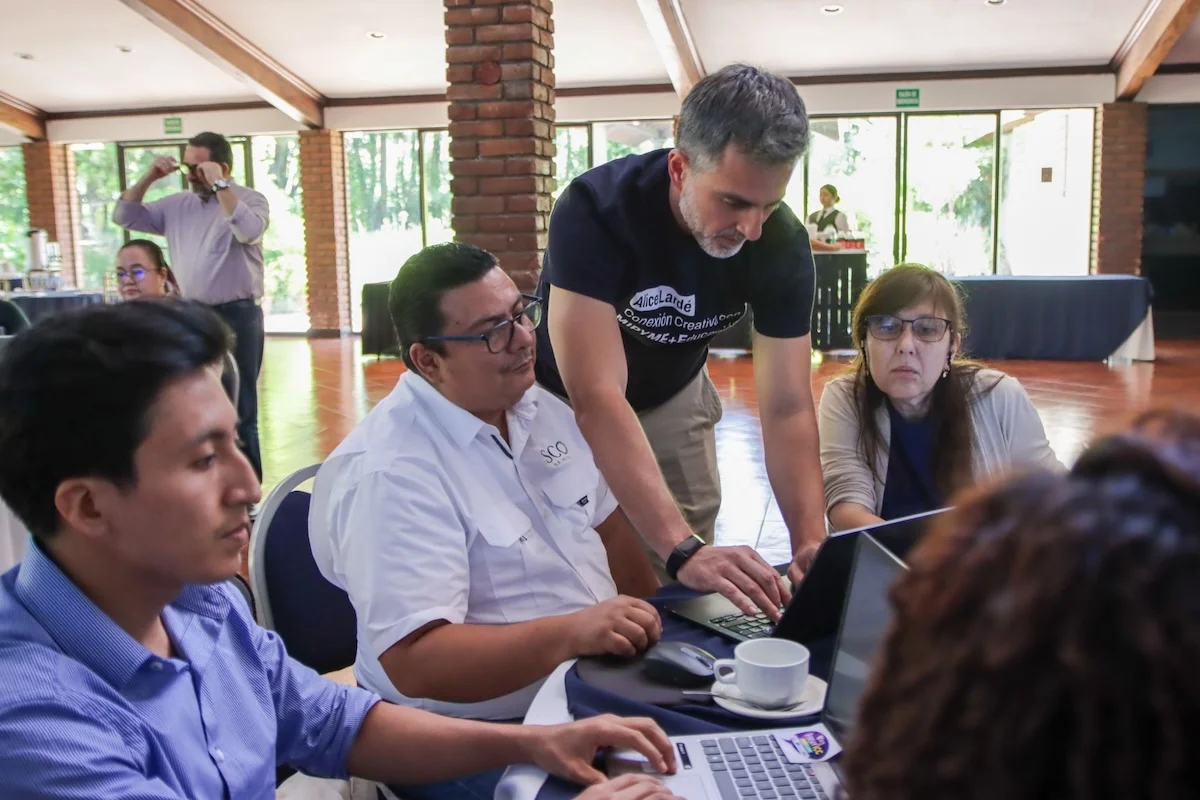
The job was not to teach technology, it was to expand what an advisor can deliver
The Organization of Ibero-American States (OEI) in El Salvador entrusted us with designing and facilitating a training program on technology adoption and digitalization with an emphasis on artificial intelligence. It was aimed at advisors from the Micro and Small Enterprise Development Centers (CDMYPE) and other support centers in El Salvador's entrepreneurial ecosystem. The program is part of a project to strengthen MSMEs in El Salvador, co-funded by the European Union.
The goal was clearly defined: improve the advisory services offered to digital businesses and to companies in the cultural and creative industries through training in AI-powered tools. The target was to certify at least 75 advisors, each with 30 hours of training and mentoring.
We ended up certifying 117 advisors, 56% above target, with 31.5 effective hours per participant.
But that is not the number that matters.
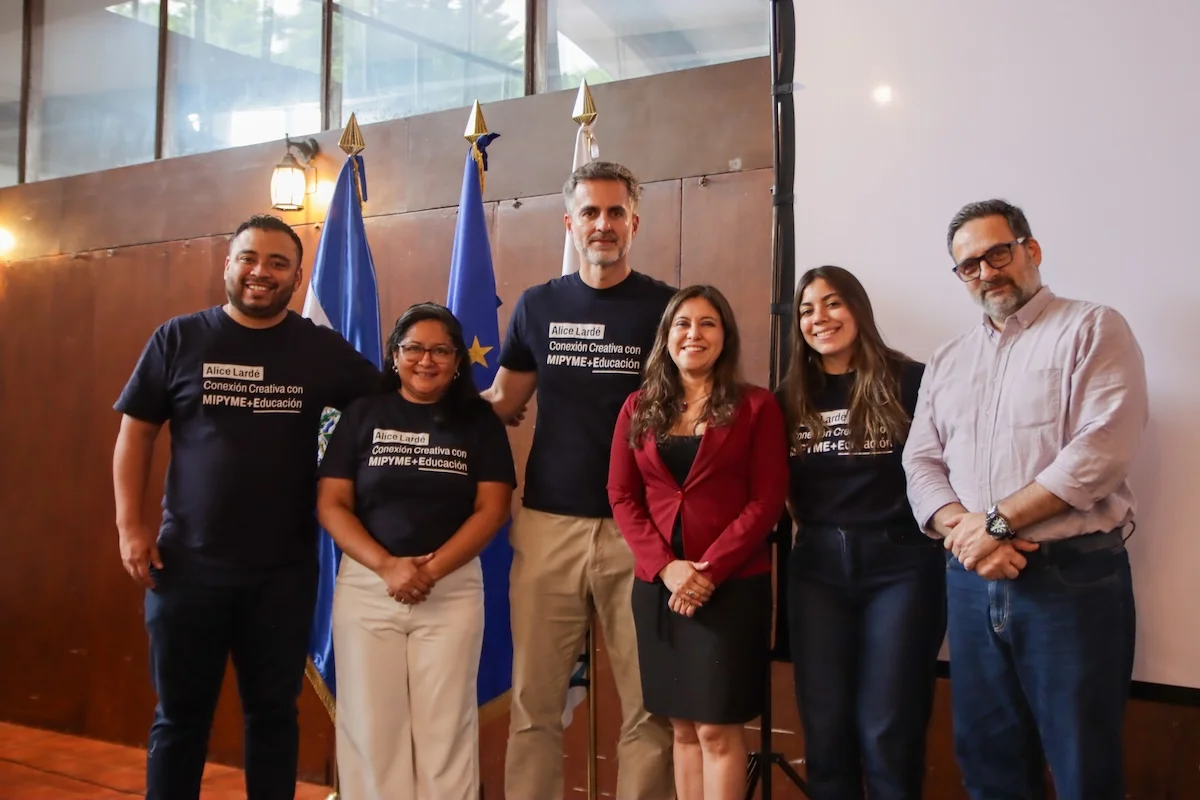
One in two advisors started at a basic level
When we ran the intake assessment, 21.9% of applicants placed themselves at a very basic digital level and 29.7% at basic. The remaining 48.4% rated themselves intermediate. Nobody checked the expert box.
That changes the nature of the challenge. We were not upskilling technology specialists. We were taking business advisors, people who know about cash flow and cost structures, and getting them to build with AI the kind of products that until then required hiring an outside provider.
One profile figure contradicts almost everything people say about technology adoption: 68% of the advisors are between 35 and 55 years old. Those under 35 made up just 21.5%. The transfer was not led by digital natives. It was led by experienced people, who are precisely the ones with the business judgment to know what is worth automating. Women made up 66% of the group.
Three locations and a real company for every advisor
The program ran over ten sessions held in person in San Salvador, with 78 advisors, San Miguel with 38, and Santa Ana with 25, reaching 12 of the country's 14 departments.
What made the difference was the mentoring. Seven hours of group support that did not come at the end but ran alongside the entire training, in groups of no more than ten people, working on a real company from each advisor's portfolio. Nobody practiced on made-up cases.
The assessment was not an exam, it was a company that came out different
The advisors worked with 79 companies in the cultural and creative industries and logged close to a thousand hours applying what they learned. These were not tech startups. 31.6% came from handicrafts, 15.2% from training and creative services, and the rest were spread across graphic design, fashion, tourism, food, and performing arts. Hammock workshops, pottery studios, designer jewelry, art academies, and dance companies adopting generative AI.
What they delivered stopped being content and started being systems
The easy headline for an AI program is that people learned to make nice-looking posts. One in seven engagements went a lot further.
Vanesa Natalie García Dueñas worked with Dionisio Compañía Artística, a theater group in San Salvador, and built them a rehearsal coordinator for six actors, thirteen scenes, and twelve sessions. Each actor marks their availability, and the tool detects scheduling conflicts and suggests which scenes to reschedule. Her comment when she handed it over was that it took her two hours at most to build.
Mauricio Ernesto Chávez Pineda worked with FRUTOS by Lula Vides, which makes handicrafts from natural materials. He started by improving the product photography and ended up setting up a sales dashboard on the business's real data, with units sold, revenue in dollars, margin by store, and a product ranking. To the diagnosis he added a SWOT matrix, an audience map by channel, and a six-month action plan.
Advisors with no technical background published working websites, and in the process discovered that code is no longer a barrier.
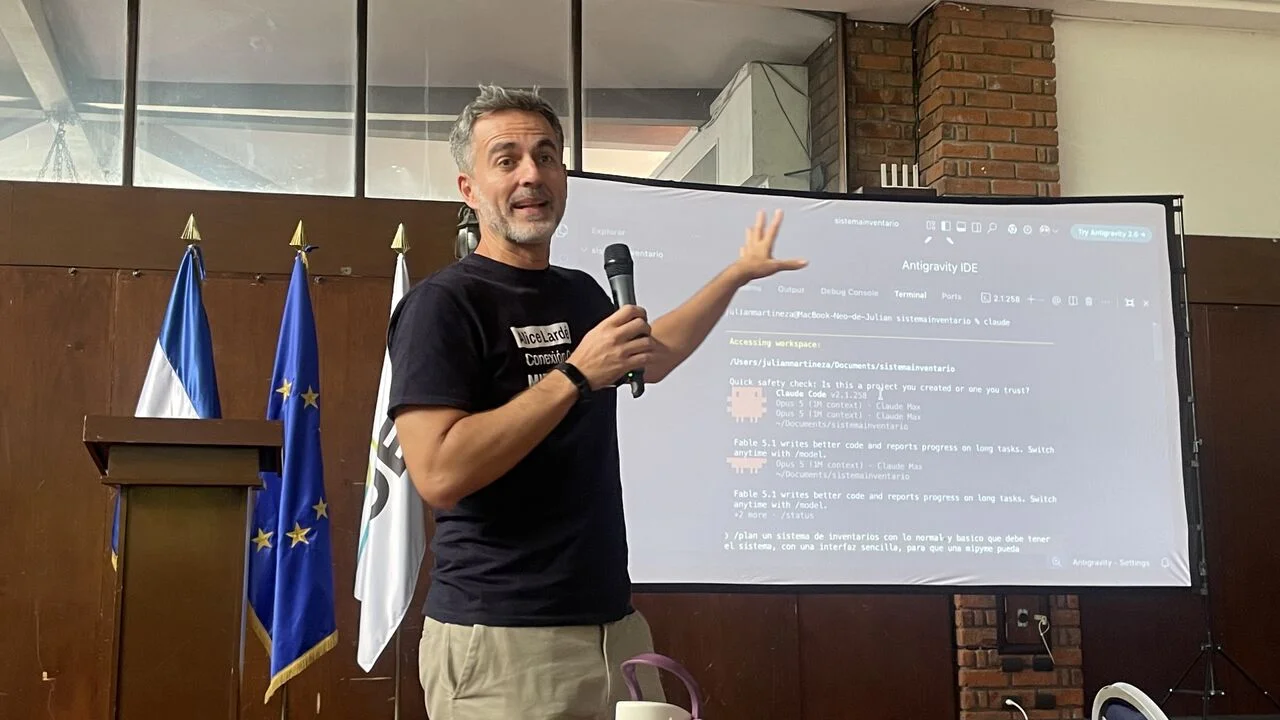
And there is an operational detail worth more than any market forecast: in Salvadoran microenterprises, AI comes in through the business owner's phone, not through a desktop computer or a corporate subscription.
79% of the companies supported are led by a woman
Karla Friné Cuadra Mejía worked with Delmy Suazo, owner of a handmade candle workshop in San Miguel, over three ninety-minute sessions done on the owner's phone. The business was called "Delmy's Creaciones" and had no defined identity or digital presence. It came out with a new name, a tagline, a color palette, a logo, a conceptual product catalog, and a prompt bank so she can keep working on her own.
When 79% of the companies supported are led by women, a technical training program also works as a mechanism for economic inclusion in the creative economy.
The closing was a hackathon, not a ceremony
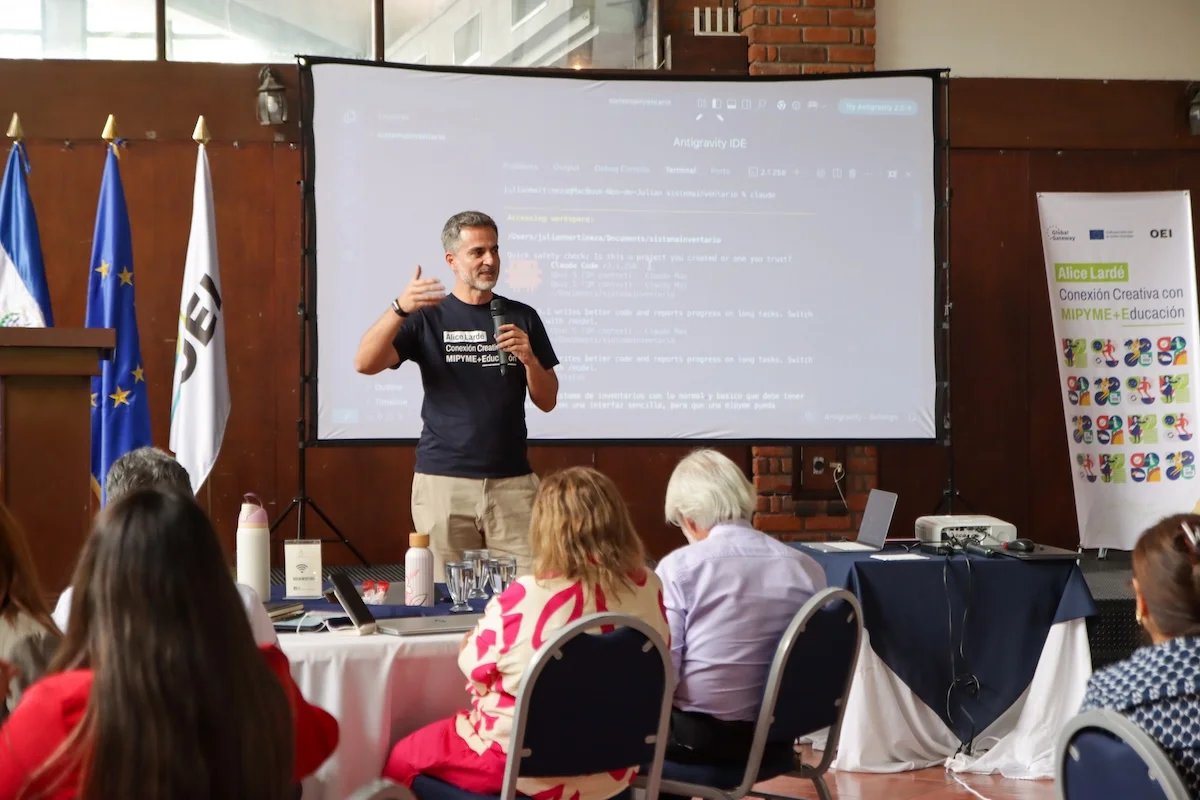
On September 3 we brought together advisors from all three locations in San Salvador for a five-and-a-half-hour day of team building. Nelson González and I supported the teams.
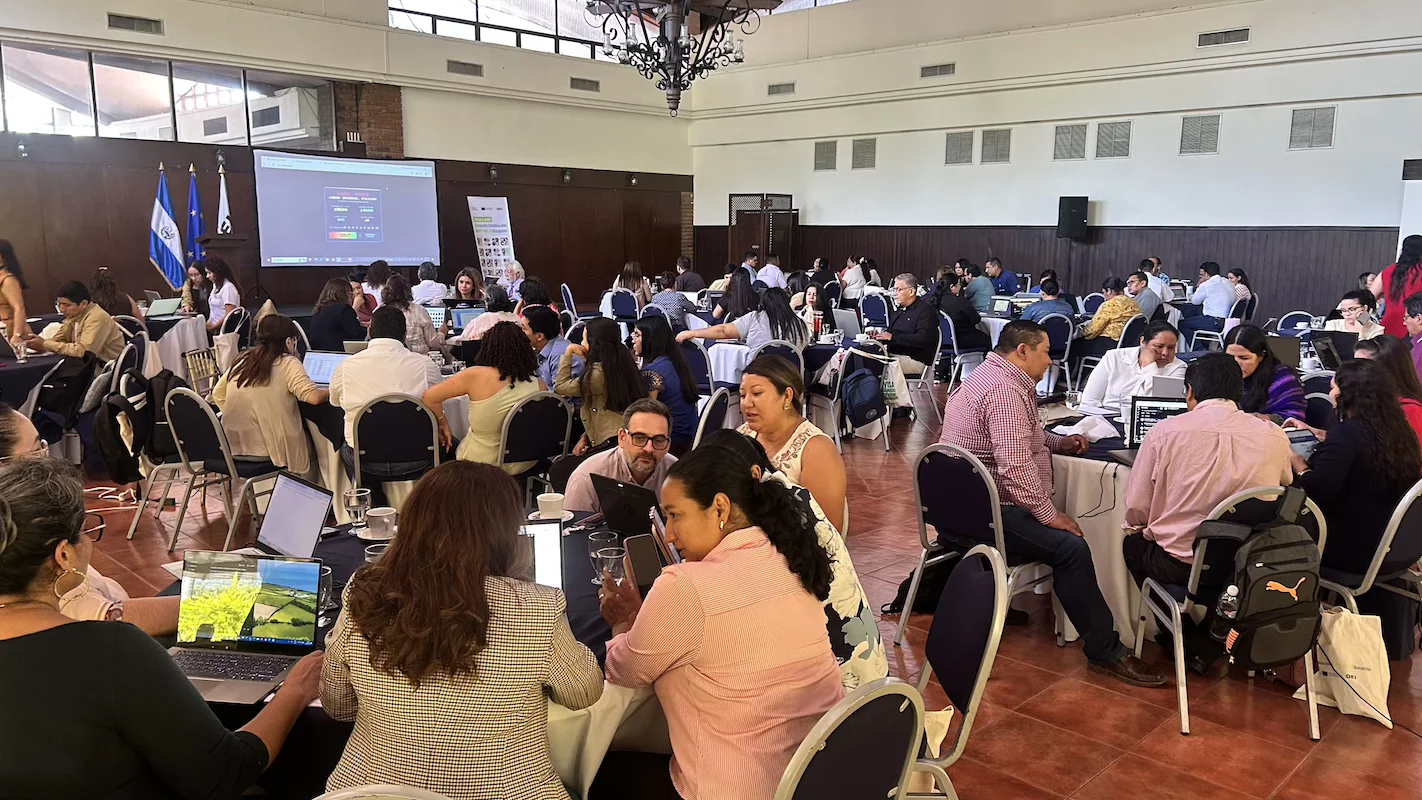
The idea was simple and hard to convey on a slide: that every advisor would see for themselves, in a single day, how much they are capable of when they work with these tools instead of reading about them. Several walked out with a working product they would not have attempted two months earlier.
Training advisors multiplies, it does not just add
What we pursued in this program was not getting 117 people to know how to use artificial intelligence tools. It was something different, and you can see it in how the results were distributed: 63 advisors supported a company from their portfolio, 22 applied what they learned to their own advisory work, and 8 took it to their own business. Each of them serves dozens of companies a year.
Artificial intelligence did not replace any of these advisors. It expanded the range of what they can deliver without depending on a third party, and it gave them back time to do what an algorithm does not do, which is understand the business of the person sitting across from them.
Several engagements are still going after the contract ended, by the advisors' own choice. That is the signal we look for in every program we design: that it keeps running once we are no longer there.
If you lead an organization that supports businesses and are thinking about how to bring AI to your network of advisors, let's talk. We design these kinds of processes for multilateral organizations, governments, and industry associations across Latin America.