Boosting e-commerce for 65 small businesses in Panama

Boosting e-commerce for 65 small businesses in Panama
Not one of the 65 companies had an online store.
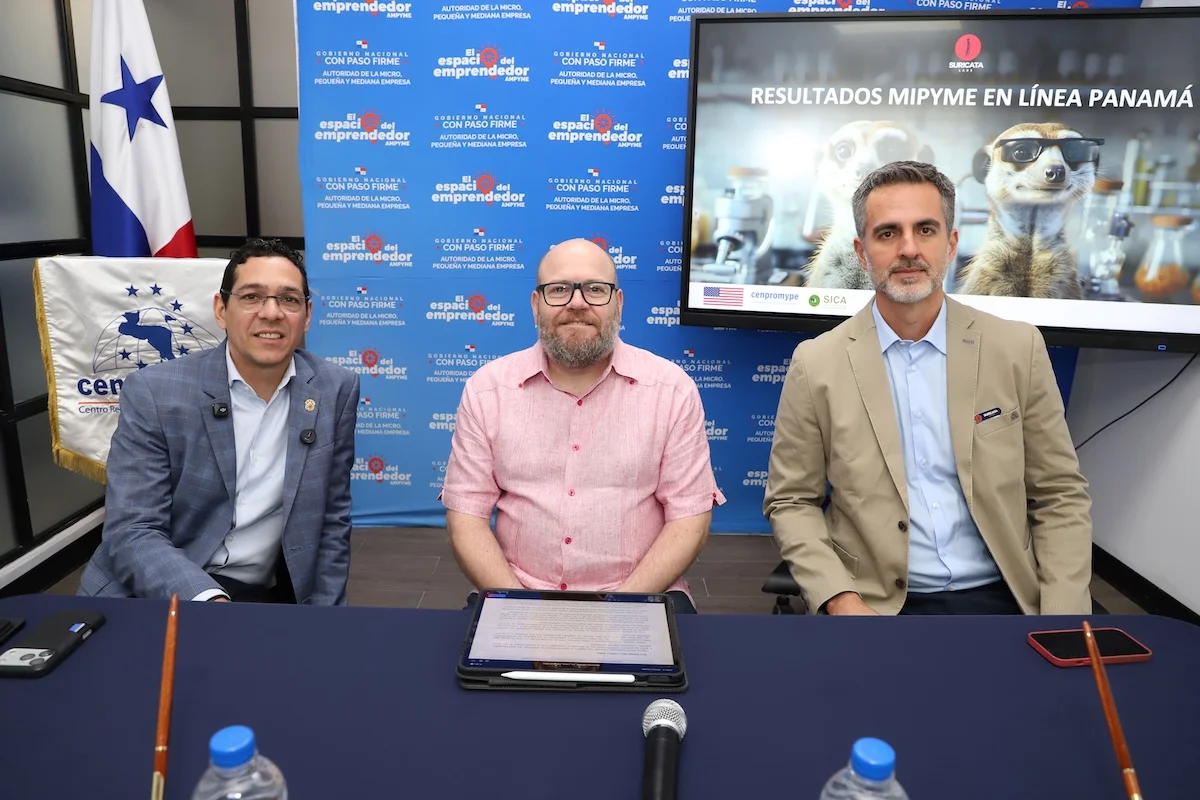
Between April and August 2026 we ran MIPYME en Línea in Panama, a business support service delivered by CENPROMYPE with funding from the U.S. Department of State and coordinated with AMPYME, the country's micro, small and medium enterprise authority. The cohort was made up of 65 Panamanian companies selected by CENPROMYPE, eight out of ten of them microenterprises, and in 72% of cases with a woman as the legal representative. Services and retail accounted for much of the group, with manufacturing, agriculture and one construction company also represented.
Five months later, 41 of those companies finished with an e-commerce plan built and reviewed, and nine are now deploying $113,100 from a capital fund. What follows is how it happened, what went wrong and what we learned, including the part we cannot prove yet.
The starting point was lower than the headline suggests
The baseline we took at the outset showed a group that promoted its products mostly on social media. Six companies reported having an informational website, and none had a transactional online store of its own.
That reframes everything that comes after. We were not optimizing existing digital channels, we were enabling the first one. Among the nine companies that later reached the capital fund, six were selling exclusively through traditional channels at the time of the diagnostic and three had no website at all.
When a company starts from there, the problem is rarely the tool. It is that nobody has helped them decide what they sell online, to whom, and at what margin.
The training ran in record time
The project had been on hold through 2025, so the training calendar was cut by several weeks. In practice that meant the course and the construction of the e-commerce plan had to run in parallel instead of in sequence, and the month of technical assistance planned for afterwards ended up overlapping with the training for four weeks.
The design held. Of the 65 companies invited, 53 entered the virtual campus and 41 completed the training with their plan submitted, against an initial target of 30 companies.
Efficient delivery, with committed business owners
Cross-referencing campus enrollment, course progress, plan submission and session attendance, the cohort sorted into four groups. Twenty-nine companies kept pace across every dimension. Twelve reached exactly the same end result, training completed and plan submitted, with minimal presence in the group sessions.
That second group relied on working through the course on their own and on the artificial intelligence tool we left permanently available to answer questions outside session hours.
The easy read would be to say those twelve companies participated less. The correct read is that the asynchronous channel is not the program's plan B, it is a channel that works on its own and that until now we were designing as a backup.
Pitch rehearsal stopped having a schedule
Between the pitch techniques session and the presentation to the fund's officers, companies had one day. In a traditional setup that means one rehearsal round with the consultant if the calendar allows, and for most people it does not.
In Panama we made Suricata's intelligent pitch evaluation tool available. The business owner logs in with a program code, decides whether to share her slides or record audio only, and the camera never turns on. The application captures the audio and the slides as she goes, and returns a score, feedback by criterion, a review of the pitch structure and comments from a simulated expert panel. The result stays in her history and downloads as a PDF.
That detail about the camera explains much of the uptake. For someone who has never presented to a fund, the cost of rehearsing is not technical, it is emotional. The companies that used it told us two things. Seeing the score lowered their anxiety because they knew where they stood before the real presentation, and fixing things with a specific comment in hand turned out to be faster than waiting for an advisor's feedback.
The 16 shortlisted companies presented their pitch on May 21. Nine were selected. It showed a new way to practice and assess a pitch using artificial intelligence, through a tool of our own, which gave the program more agility and let far more companies rehearse and evaluate their pitch than would otherwise have been possible.
What we can state about the process
The exit measurement replicated the entry instrument across nine dimensions of e-commerce capability. All nine improved and none went backwards, with the overall average moving from 2.81 to 3.13 on a scale of 1 to 5.
What matters is not the size of the shift but where it happened. The two largest gains were in digital security (+0.63) and in strategic e-commerce plan (+0.47), which were precisely the two dimensions where the cohort had reported the widest gap at the start. The program moved what it set out to move.
What is verifiable at the close of the engagement is installed capability and an enabled digital channel, with plans formulated, suppliers contracted and campaigns running. The commercial effects of those investments, in sales, new customers and markets reached, show up in the following months and fall outside the contract's measurement window. That is why we proposed a deferred measurement at three and six months after closing, with a short instrument that asks directly about sales and new customers. Claiming commercial impact today would be convenient, and it would be false.
Setting up the store is the easy part
The most important recommendation we left has nothing to do with technology. During the execution of the fund we confirmed that the digital advisor handles the technical side well, and that what stays uncovered are the business decisions the investment opens up.
A company can finish the program with its store built, its payment gateway working and its campaign running, without having defined which segment it goes after first, what price and what margin it can sustain in the digital channel, or how online sales fit with the operation it already had. That conversation needs a business profile, not a technical one, and it is what we are adding as a separate role for the next edition.
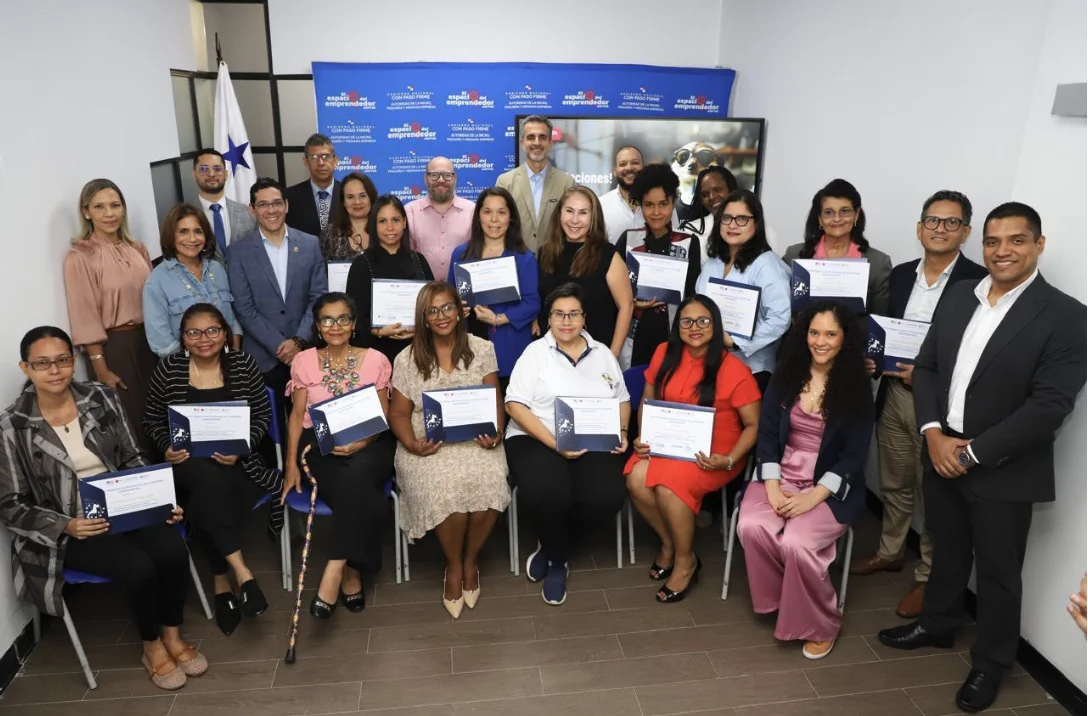
On June 5, at AMPYME headquarters in Panama City, the 41 graduating companies received their diploma and signed the agreement joining the Red Nacional MIPYME en Línea, the national MSME network.
If you are designing a business support program and want to discuss how to hold together the stretch between training and the deployment of funds, let's talk. You can also see how we work on artificial intelligence strategy inside our programs.