What we learned facilitating a workshop at PRODEM
AI for entrepreneur support organizations: what we learned at PRODEM
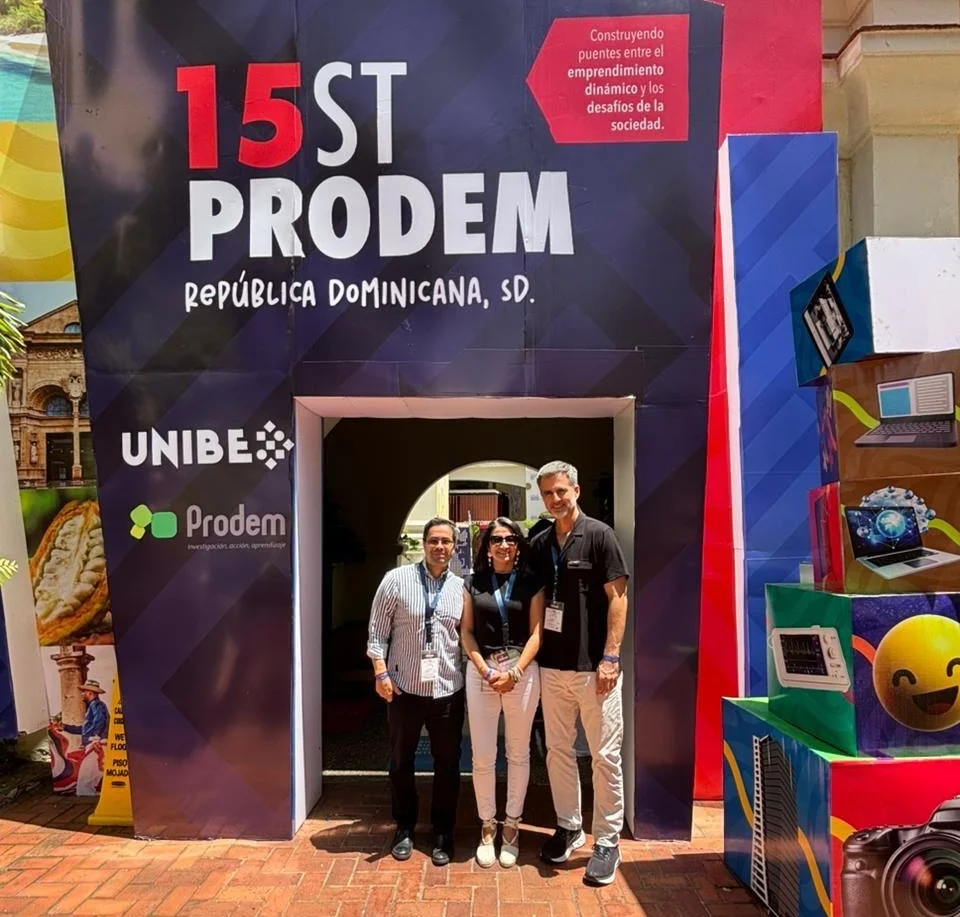
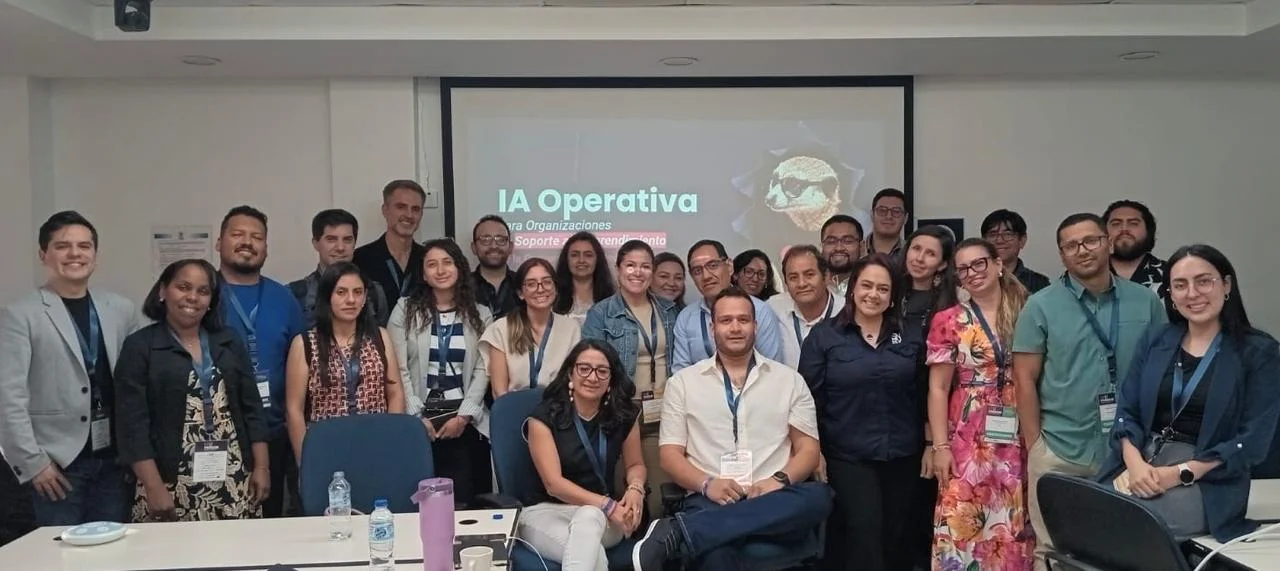
In May 2026 we were in Santo Domingo participating in the 15th PRODEM Congress. We brought a 90-minute workshop on operational artificial intelligence for entrepreneur support organizations (ESOs), aimed at teams from incubators, accelerators, chambers of commerce, and business development programs from eight countries: Cuba, Costa Rica, Uruguay, Argentina, Chile, Colombia, Peru, and El Salvador.
This post is a summary of what we did, what worked, and what we took away from the gathering.
What PRODEM is and why context matters
PRODEM is the Entrepreneurship Development Program, an academic initiative led by Hugo Kantis that has spent 15 years as the most relevant gathering point for those building entrepreneurial ecosystems in Latin America. It's not a networking conference or an institutional forum. It's an applied research space where debates are honest and hallway conversations tend to be just as valuable as the formal sessions.
That context matters because it defines the type of participant who shows up: people with years of sector experience, formed judgment, and little appetite for generic presentations. If you were going to facilitate a workshop there, you had to arrive with something concrete.
The problem we addressed
The workshop started from a tension several participants already knew but few had openly discussed: ESOs accompany the digital transformation of hundreds of companies while their own internal processes remain manual, fragmented, and highly dependent on key individuals.
In most cases it's not a budget problem. It's a priority problem — and the lack of opportunity to see what this looks like when it's actually solved.
We started there, without softening it.
How the workshop unfolded
Demystifying before building
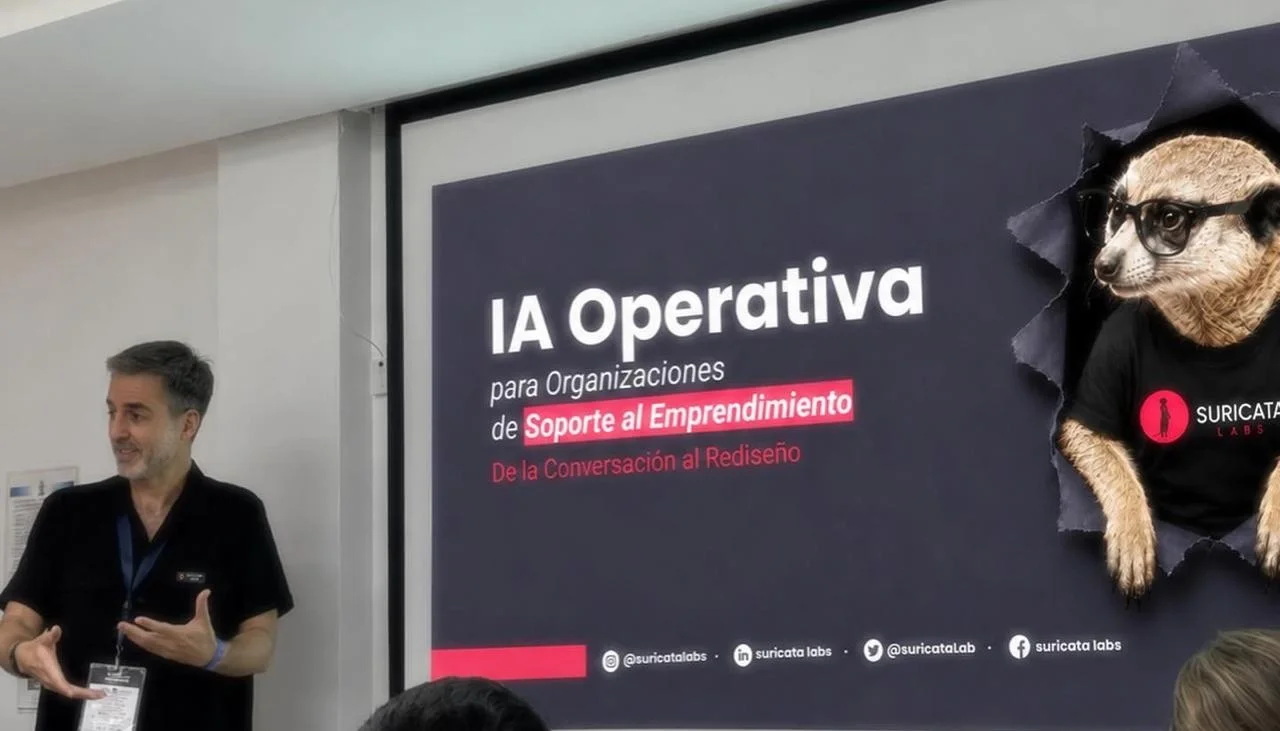
The first thing we did was demystify the most common question. When someone says they want to learn about artificial intelligence, the real question almost always in their head is: what tool should I use? ChatGPT, Copilot, Gemini, whatever. The workshop started there, but to go in the opposite direction: tools change. The one you use every day today might be irrelevant in six months, replaced by something better. If your understanding of AI depends on a specific tool, your understanding is fragile.
What doesn't change is understanding what the technology itself can do: synthesize information, generate content, automate repetitive decisions, analyze patterns in data no person would have time to review. Those are the real enablers. The tools are just the interface of the moment.
The OAT framework: assessing technological maturity
With that established, we moved into a self-assessment using the OAT framework we use at Suricata Labs to evaluate technological maturity and guide an AI strategy:
- Optimize: existing processes that are inefficient
- Accelerate: increase the value generated by existing products or services
- Transform: build something new that redefines the operation and the industry
Each participant assessed their own organization's processes. No politically correct answers.
Live demonstration
The second part was a live demonstration of AI-powered business support cases we operate at Suricata Labs across different programs — showing what this looks like in practice: a conversational agent that supports diagnosis processes, or a platform that evaluates entrepreneurs' pitches using artificial intelligence.
Group work and closing plenary
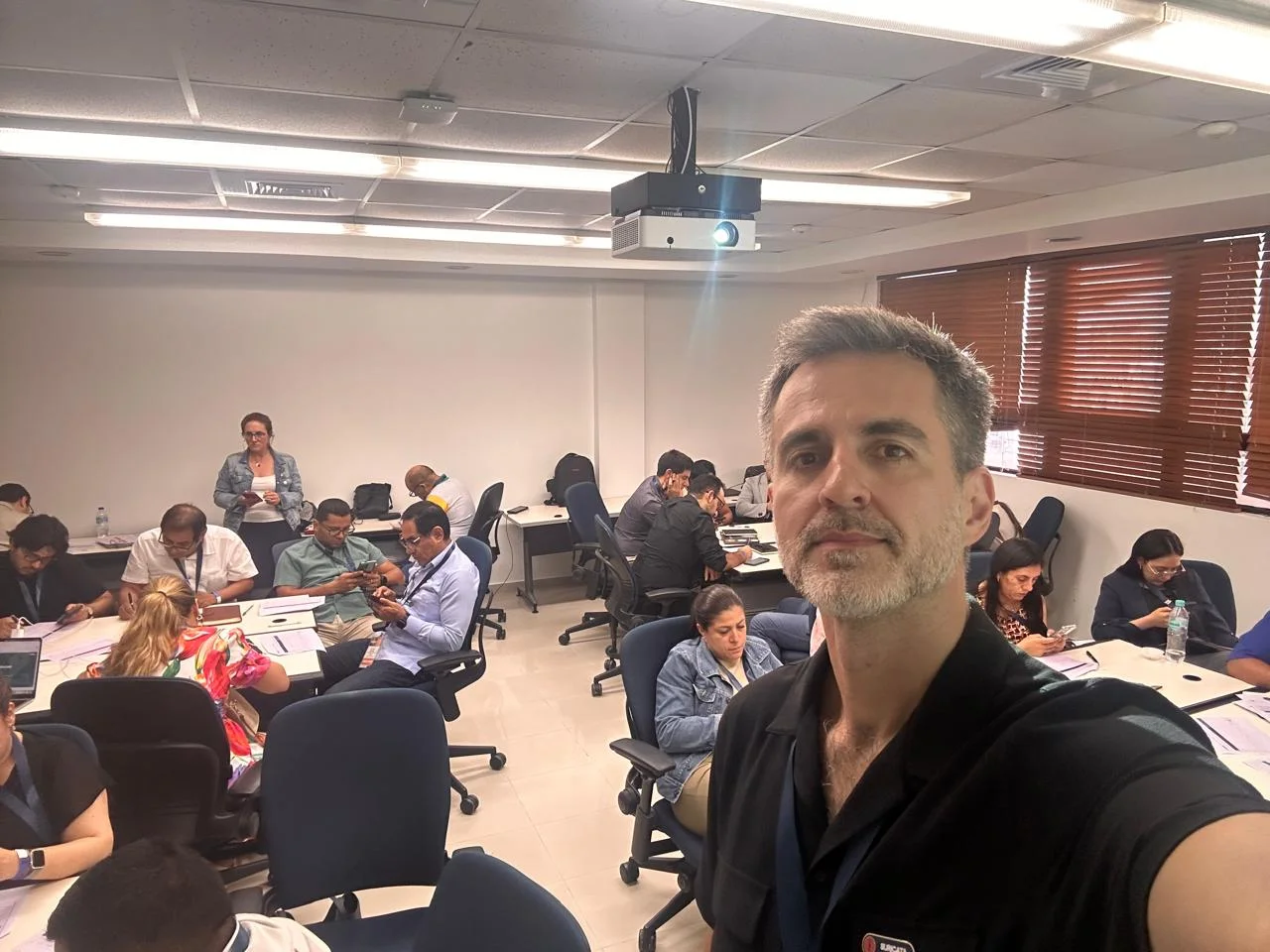
After the demonstration, groups worked on their own organizations, identifying where the opportunity to integrate operational AI lies in their methodology and what they could do in the next 30 days without additional budget.
The closing plenary was open. Each group shared their reflections, and space opened up to discuss real experiences with AI — what had worked and what hadn't. That part was probably the most valuable of the whole workshop.
What we took away
Beyond the workshop, PRODEM has something few events manage to sustain over 15 years: a culture of honest conversation among peers. Directors of organizations from very different countries sharing generously what works in their contexts and what doesn't, without the image-consciousness that usually dominates these kinds of forums.
During the week, the concept of egosystem came up repeatedly — the difference between an ecosystem that functions as one and one that operates with the logic of institutional protagonism. It's a distinction we know well from our work in local ecosystems, and finding colleagues across the region who name it and discuss it with the same clarity was one of the best conversations of the trip. We touched on the same tension at the Conecta Summit 2026, where it surfaces from a different angle.
The question of how ESOs measure what they do also came up repeatedly. The debate around the end of vanity metrics in business support isn't only local: it's a conversation happening across the region.
We came back with some concrete commitments with organizations in the region and several open questions about how to keep developing this line of work with ESOs in Latin America.
If your organization is exploring how to integrate AI into your business support programs, let's talk.